
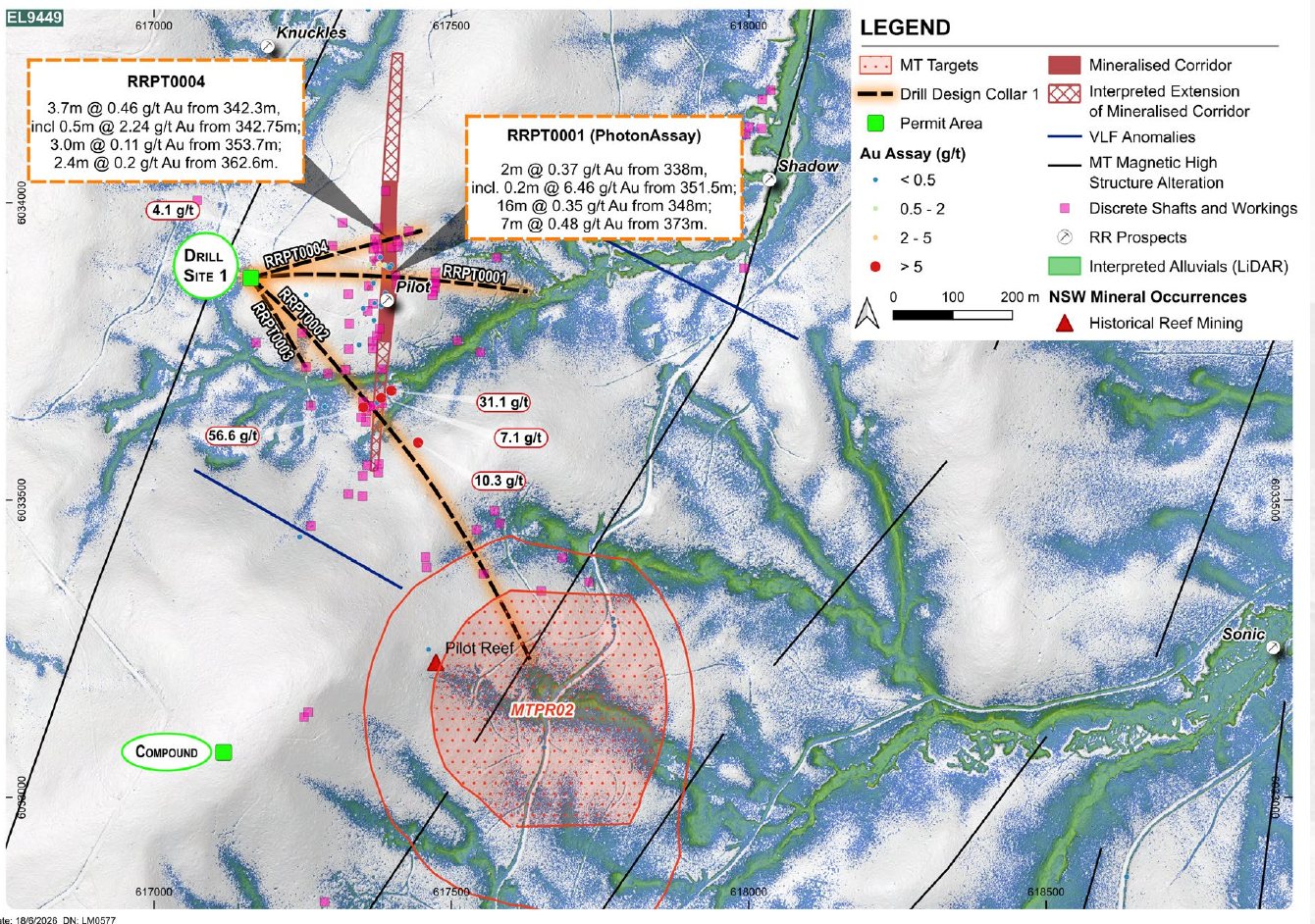
Located approximately 20km southeast of Tumbarumba, Pilot encompasses a 2.4km × 2.9km interpreted exploration target footprint supported by historical high-grade gold mining, extensive surface workings and modern exploration.
Right Resources has completed 3,039.5m of maiden diamond drilling and advanced its geological interpretation through research with the University of Tasmania's Centre for Ore Deposit and Earth Sciences (CODES).
Historical Gold Mining
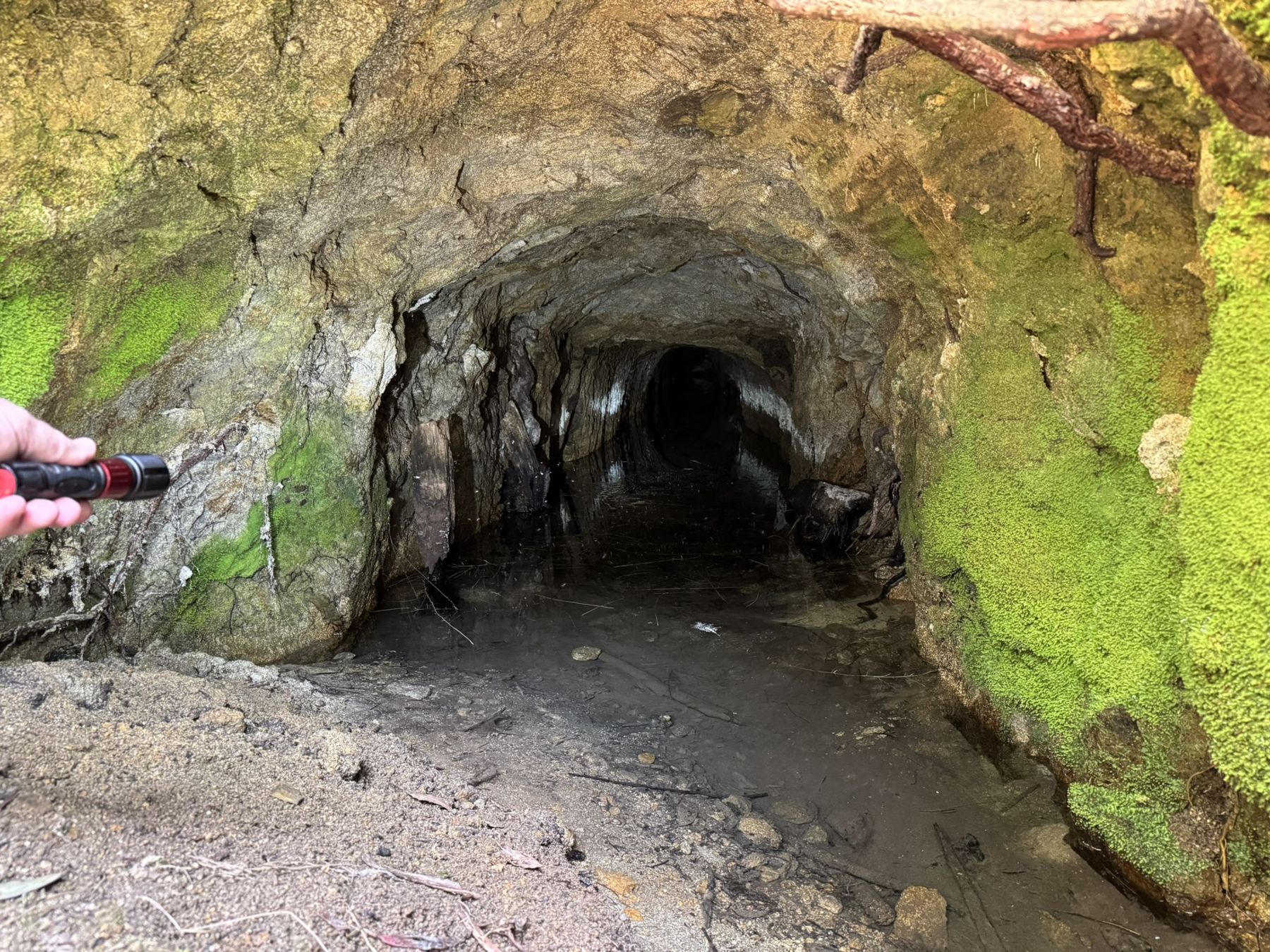
The historic Pilot Reef Mine produced approximately 2,662 tonnes of ore averaging 38 g/t Au between 1876 and 1881, according to historical records.
Modern LiDAR interpretation has identified more than 1,700 possible mining-related workings across the broader project area, highlighting the extent of historical activity.
Historical production predates the JORC Code and is shown separately from current exploration results.
Geological Interpretation
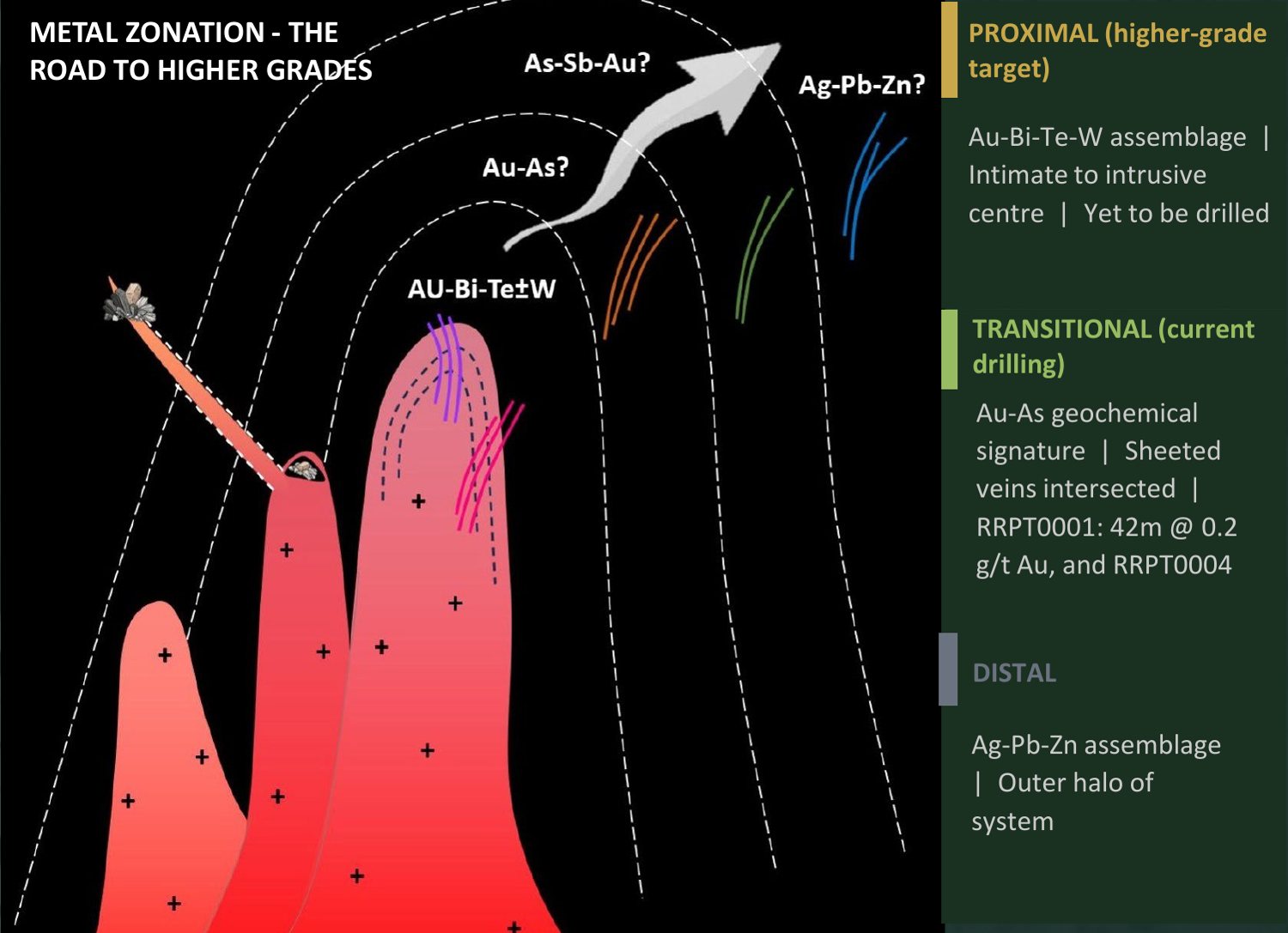
Research completed with CODES at the University of Tasmania supports the interpretation of Pilot as part of a Reduced Intrusion-Related Gold System (RIRGS).
Preliminary geological modelling suggests the maiden drilling program intersected a transitional zone, while the potentially higher-grade proximal zone remains untested.
Metallurgical Testwork
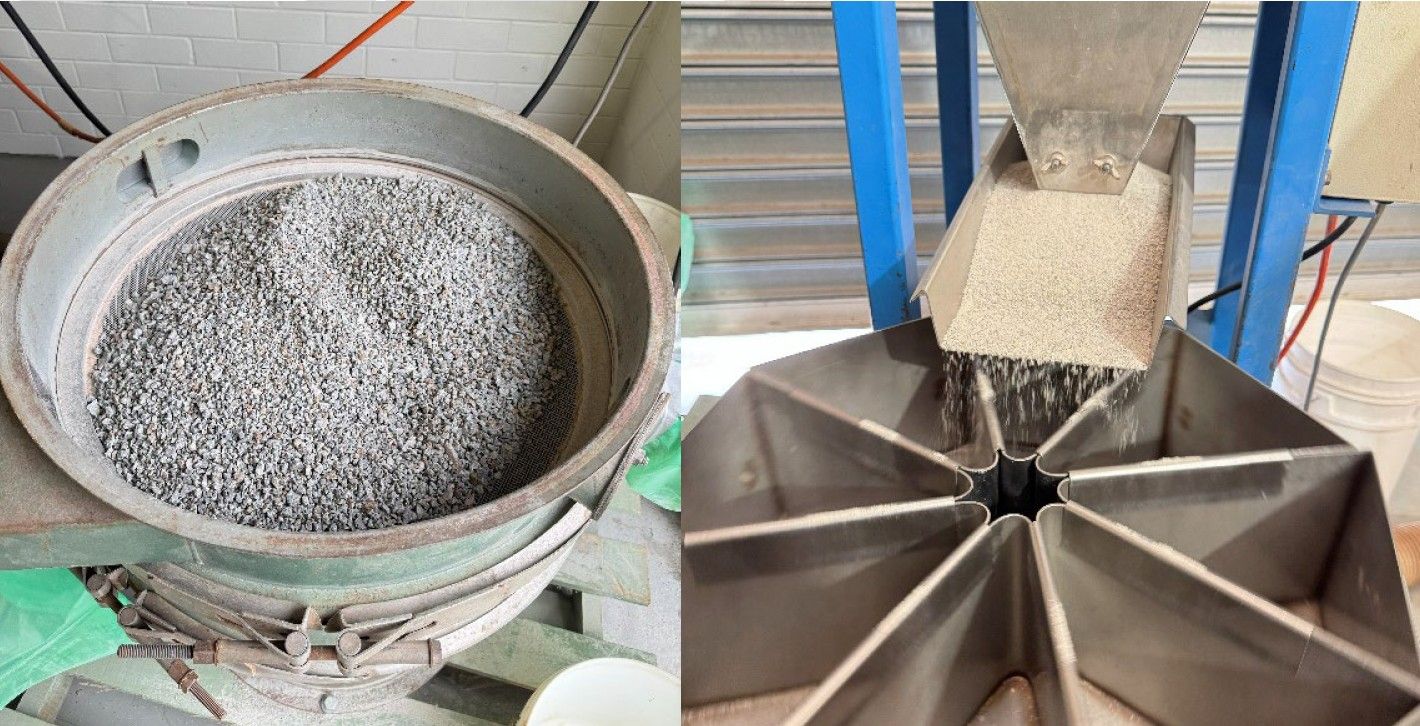
Preliminary metallurgical testwork on a composite sample collected from historical mullock dumps achieved 89.9% gold extraction within 24 hours. These preliminary results provide early information on the potential metallurgical characteristics of the Pilot mineralisation.
Next Steps
Right Resources is integrating geology, geochemistry, drilling and metallurgical data to refine targets for future exploration, including the untested proximal zone.
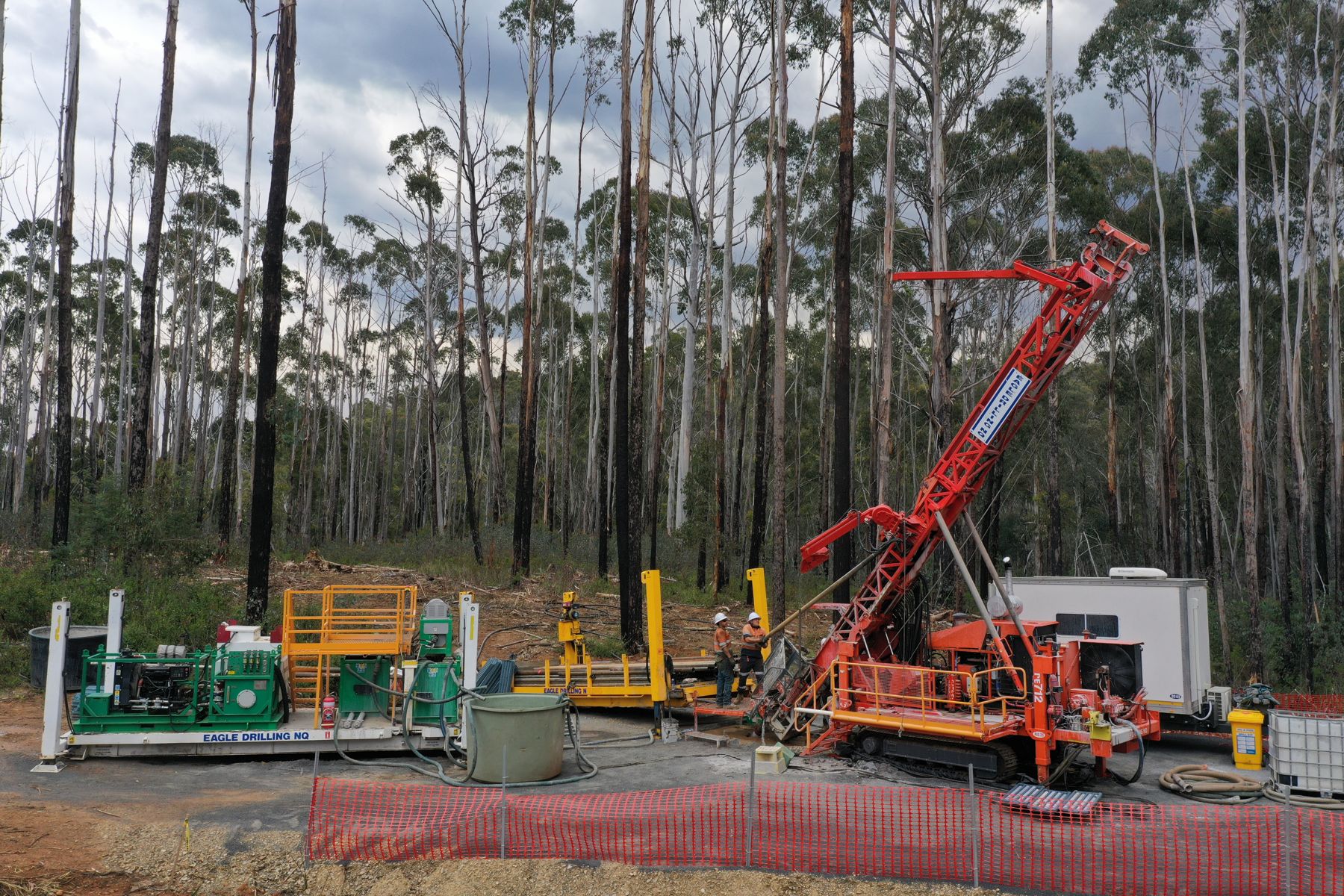
3,039.5m of diamond drilling across five holes, and 89.9% gold extraction within 24 hours in preliminary testwork (27 October 2026).
Read the announcements →In the preliminary model, maiden drilling intersected the transitional zone. The higher-grade proximal zone sits closer to the intrusion.
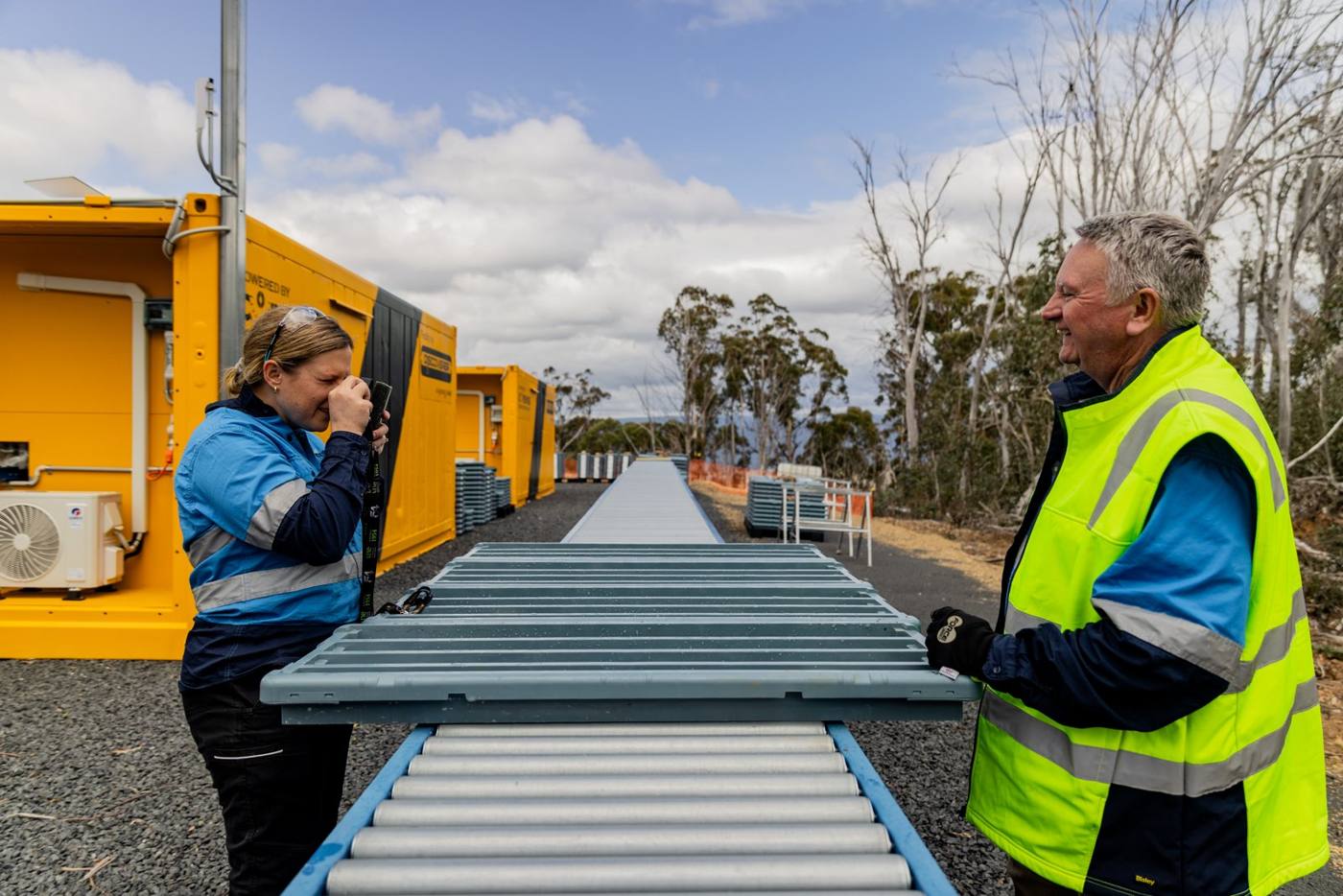
Targets are being refined for future exploration, including the proximal zone. Any follow-up drilling is subject to results and approvals.
Plans may change as results are received. See the ASX announcements for full details.
Stay up to date with Right Resources
Register on our investor hub to receive every ASX announcement by email.

Advancing gold and tungsten exploration in the historic Tumbarumba Goldfields of southern New South Wales.
© 2026 Right Resources Limited (ASX: RRE). ABN 81 649 632 744